


DYLAN'S STORY
Before his accident, Dylan’s life was busy and full.
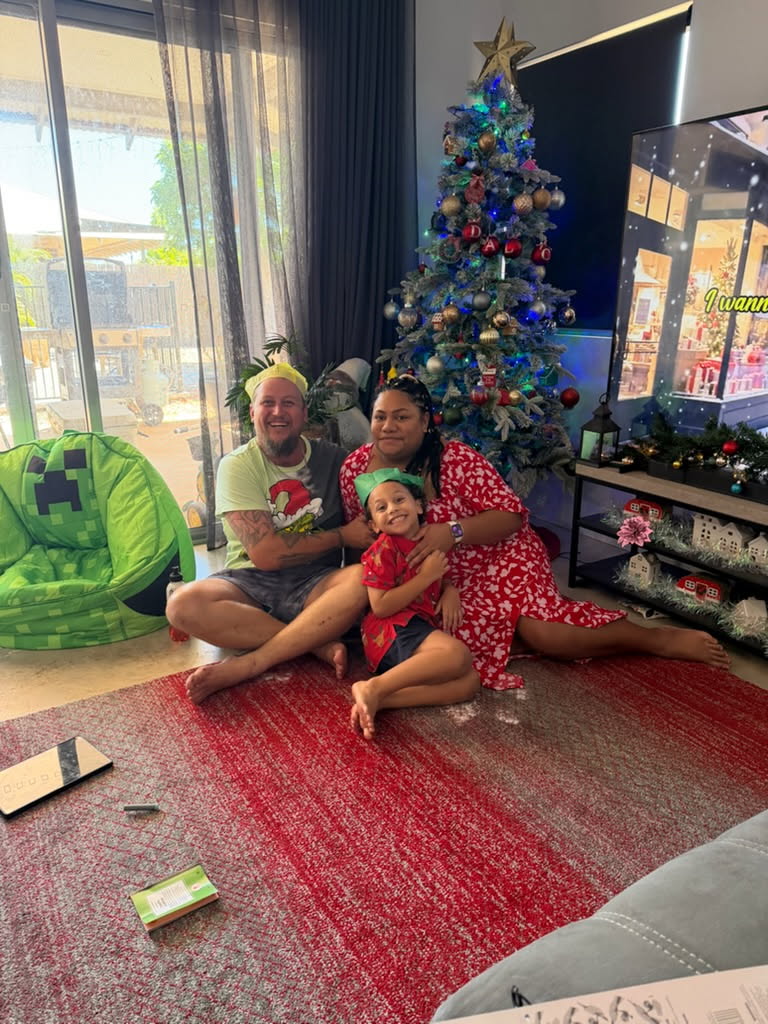
Living in Broome with his partner Ana and their young son Lenny, he loved fishing, working hard and spending time with his family. He describes himself as being “100 miles an hour”, always on the go.
In 2023, everything changed.
On a wet afternoon, Dylan took his dog for a walk along the beach, something he had done countless times before. He remembers very little after that. A single-vehicle crash left him with multiple injuries, including a traumatic brain injury and a thoracic aortic dissection.
What followed was a time of enormous uncertainty.
Dylan spent weeks in hospital, with his family receiving different information about what his future might look like. They were told he might never speak again or could be left with significant physical impairments. Meanwhile, Ana was caring for their young son, regularly travelling more than 2,000 kilometres between Broome and Perth to be by Dylan’s side.
For a period, Dylan was unable to speak because of a tracheostomy.
Instead, he communicated by writing on a whiteboard. One message asked Ana not to come and see him anymore. He didn’t want Lenny to remember him the way he was then.
When Dylan looks back on his time in hospital, some memories are clear and others are not.
He remembers the incredible nursing and allied health teams. He remembers the friendships he formed during rehabilitation. But he also remembers vivid dreams and hallucinations that blurred into reality as his brain tried to make sense of what had happened.
Recovery came with its challenges. Balance issues, fractures, confusion and fatigue became part of daily life. Dylan still laughs about the day he was finally cleared to walk independently, only to slip in a wet bathroom and hit his head moments later. “I decided not to tell anyone in case they took my walking privileges away,” he recalls.
Throughout it all, support made a difference. Dylan credits his family, hospital staff and rehabilitation teams with helping him through the toughest periods of recovery. He also says his sense of humour played an important role.
After returning home, rehabilitation continued. Physiotherapy, occupational therapy and speech therapy became part of life, followed by return-to-work planning, driving assessments and ongoing support. Day by day, Dylan committed himself to the process.
Support from us via the Catastrophic Injury Support Scheme helped with medical travel, medications and coordinating the services he needed as he navigated recovery.
As he worked towards returning to employment, Dylan remained determined to do as much as possible independently. “I don’t like handouts, but I knew I needed the support,” he says. “ICWA has been amazing. It’s just knowing there’s always backup for me.”
Today, Dylan works reduced hours and manages ongoing cognitive fatigue by pacing himself and taking regular breaks. His role looks different from the career path he imagined before his injury, but he has found work he genuinely enjoys.
Perhaps the biggest change has been his perspective. Before the accident, he rarely slowed down. Now, he understands the importance of balance.
He says he has become more patient, more caring and more appreciative of the people around him. “You don’t know what’s around the corner. Take your time. Show your love and respect. I almost learned that the hard way.”
Today, his goals are simple. To keep improving. To increase his work hours. To enjoy a beer on the boat. And most importantly, to be fully present for Ana and Lenny.
His message to others is straightforward: Don’t give up. Put one foot in front of the other. Keep moving forward. And believe you can do it.
Dylan’s story is not about getting back to exactly who he was before. It is about moving forward with gratitude, determination and perspective.
For Dylan, success is simple: Show up. Keep trying. And cherish what matters most.
You can access each story here:
Page Last Updated 31 Aug 2026