

MATT'S STORY
Before his accident, Matt’s life was busy and familiar. He worked FIFO, balancing family life with long shifts. He enjoyed technology, problem solving, and motorbike riding in his free time. At 46, life felt steady and predictable.
On 13 September 2021, everything changed.
Matt was out riding on a familiar road when a car suddenly moved into his lane. The collision left him with a severe brain injury and multiple fractures.
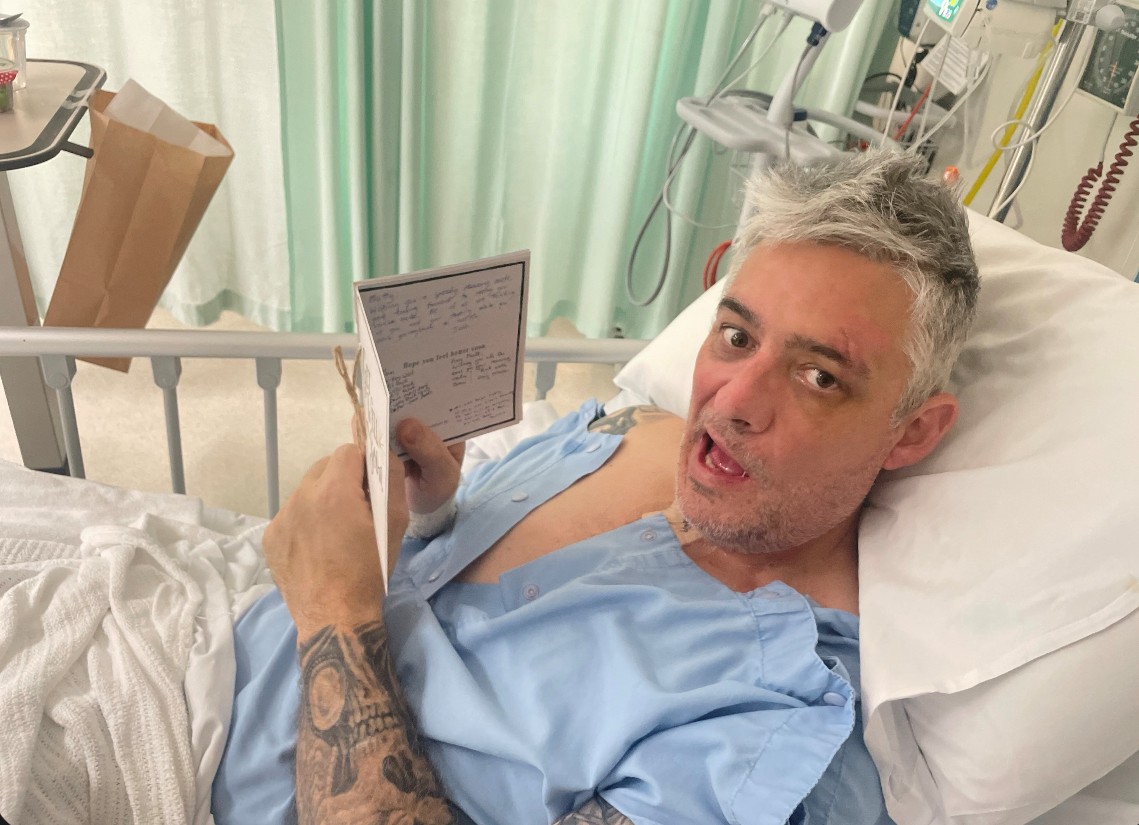
He was first taken to Bunbury Hospital before being transferred by the Royal Flying Doctor Service to Perth. He spent two weeks in a coma at Royal Perth Hospital before moving to Fiona Stanley Hospital.
When Matt woke, surrounded by his wife and parents, he had no memory of the crash. His thinking felt slow. Speech was difficult. Even simple things, like knowing the day of the week, required effort. The skills he relied on for his life suddenly felt unfamiliar.
But recovery quickly became his focus.
With support through our services, Matt committed himself to speech therapy, occupational therapy and physiotherapy. He approached rehabilitation the same way he approached everything else: by showing up consistently and doing the work.
There were no breakthroughs. Progress came through small, steady steps.
Matt immersed himself in learning about brain injury recovery, neuroplasticity, and strategies that could help him adapt. He developed systems to support his memory and organisation, even creating his own apps to help him manage daily life.
He became, as he put it, “a big believer in tailoring recovery to what works for you.”
Family played a central role throughout his recovery, as did his determination to keep moving forward. Matt credits what he calls his top voice, the inner voice that reminded him, “you’ll be okay.”
Recovery was not without challenges. Fatigue became a constant companion. Noisy environments were difficult to manage. Emotional changes sometimes felt unfamiliar. And Bell’s palsy added another visible reminder of what he had been through.
“I didn’t want to be a burden. Your body spends so much energy repairing the brain. It’s exhausting.”
Some activities he once loved became harder. Instead, he found new routines that worked for him. Walking helped regulate his energy and mood, while the systems and tools he created helped him stay organised and focused.
Support also made a lasting difference. Matt speaks highly of his Care Services Coordinator, who helped guide him through the uncertainty of recovery. “She was an oracle of hope.” “I feel really lucky. She steered me in the right direction.”
After two and a half years of rehabilitation, Matt achieved one of his biggest goals: returning to full-time FIFO work with BHP, where he had already spent over 20 years of his career.
Today, Matt continues looking forwards. He is exploring opportunities in app development, staying involved in his children's lives, and focusing on building a future that works for him.
His life looks different than it did before his injury, but he is not defined by what he has lost. Instead, he focuses on what is possible. “Find what works for you. Take what helps and leave what doesn’t. Brains are complicated pieces of machinery... but they can recover. You can recover.”
His message is simple:
Be patient with the process. Keep showing up. Find the strategies that work for you. And remember that recovery is possible.
Today, Matt’s story is not about returning to life exactly as it was before. It is about rebuilding. With determination, support, and a willingness to adapt, he has created a life that continues to hold purpose, direction and hope.
You can access each story here:
Page Last Updated 31 Aug 2026